14. Juni 2026

Poel. Wind, Wege, Wetter. Insel im Gegenlicht

Der Wind wehte von Südwest.

Er strich über die flachen Wiesen, bog das Gras, schob Wolken über die Bucht und ließ das Licht von einer Minute zur nächsten wechseln.
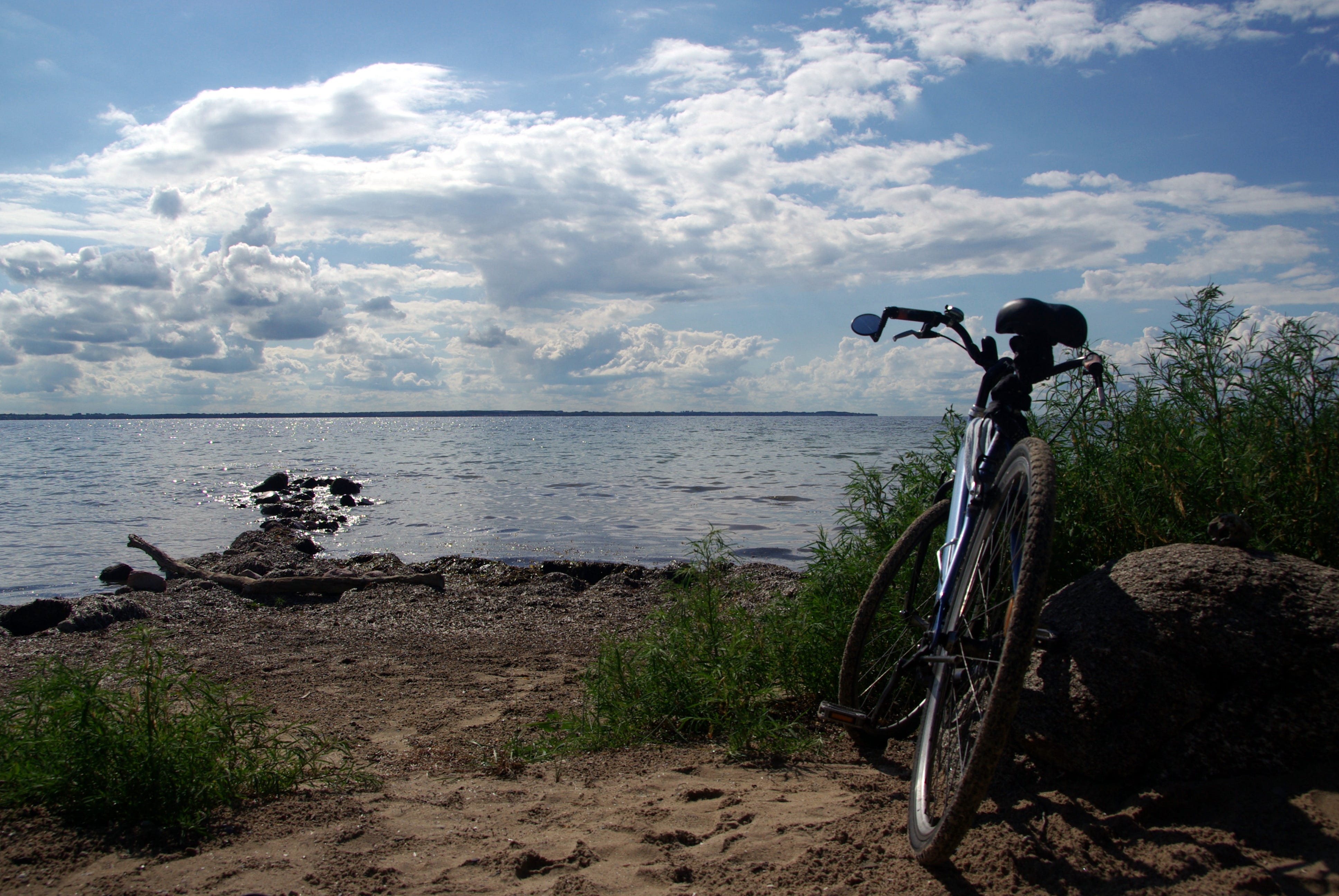
Auf Inseln ist Wetter keine Kulisse. Es entscheidet, was möglich ist.

Ich stellte das Fahrrad an den Strand. Vor mir lag die Wismarbucht, dahinter die offene See. Das Wasser war unruhig, aber nicht aufgewühlt. Möwen standen gegen den Wind in der Luft, als hätten sie vergessen, dass Fliegen eigentlich Bewegung bedeutet.
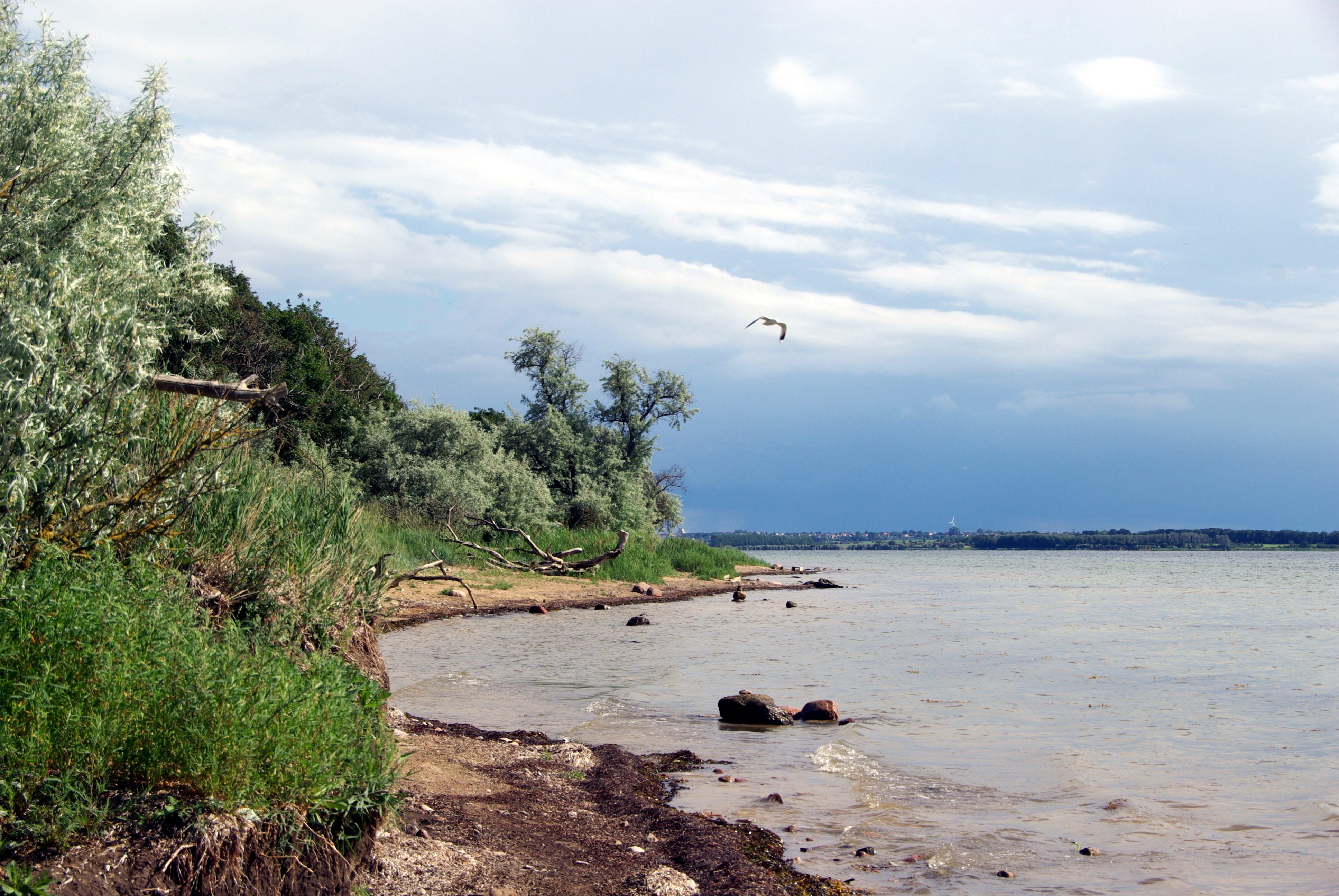
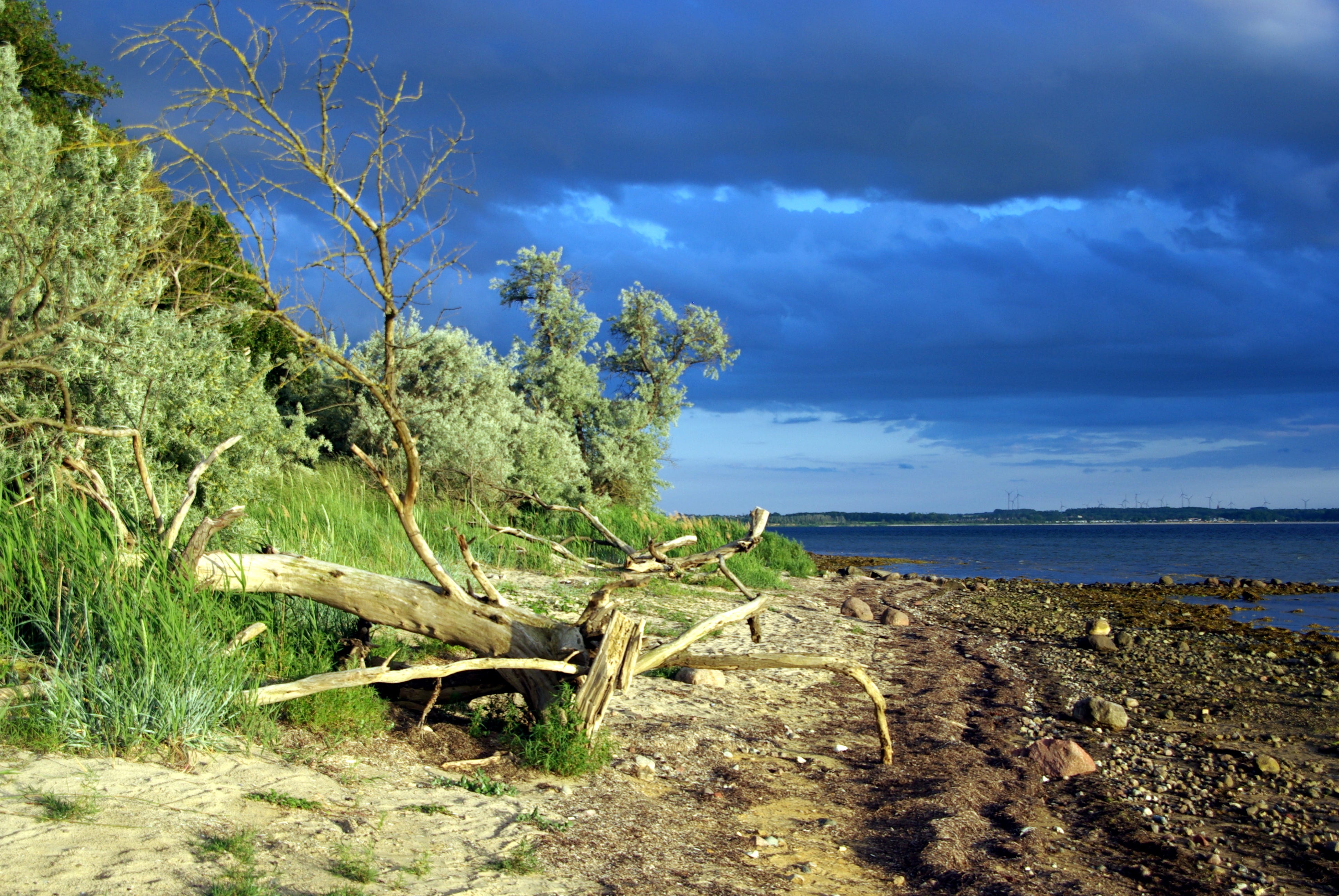
Der Pfad am schmalen Strand führte unter niedrigen Bäumen entlang. Manche waren bereits umgestürzt. Die Steilküste verlor jedes Jahr einen halben Meter Land. Wurzeln ragten aus dem Sand wie freigelegte Leitungen. Die Ostsee arbeitet langsam, aber gründlich.
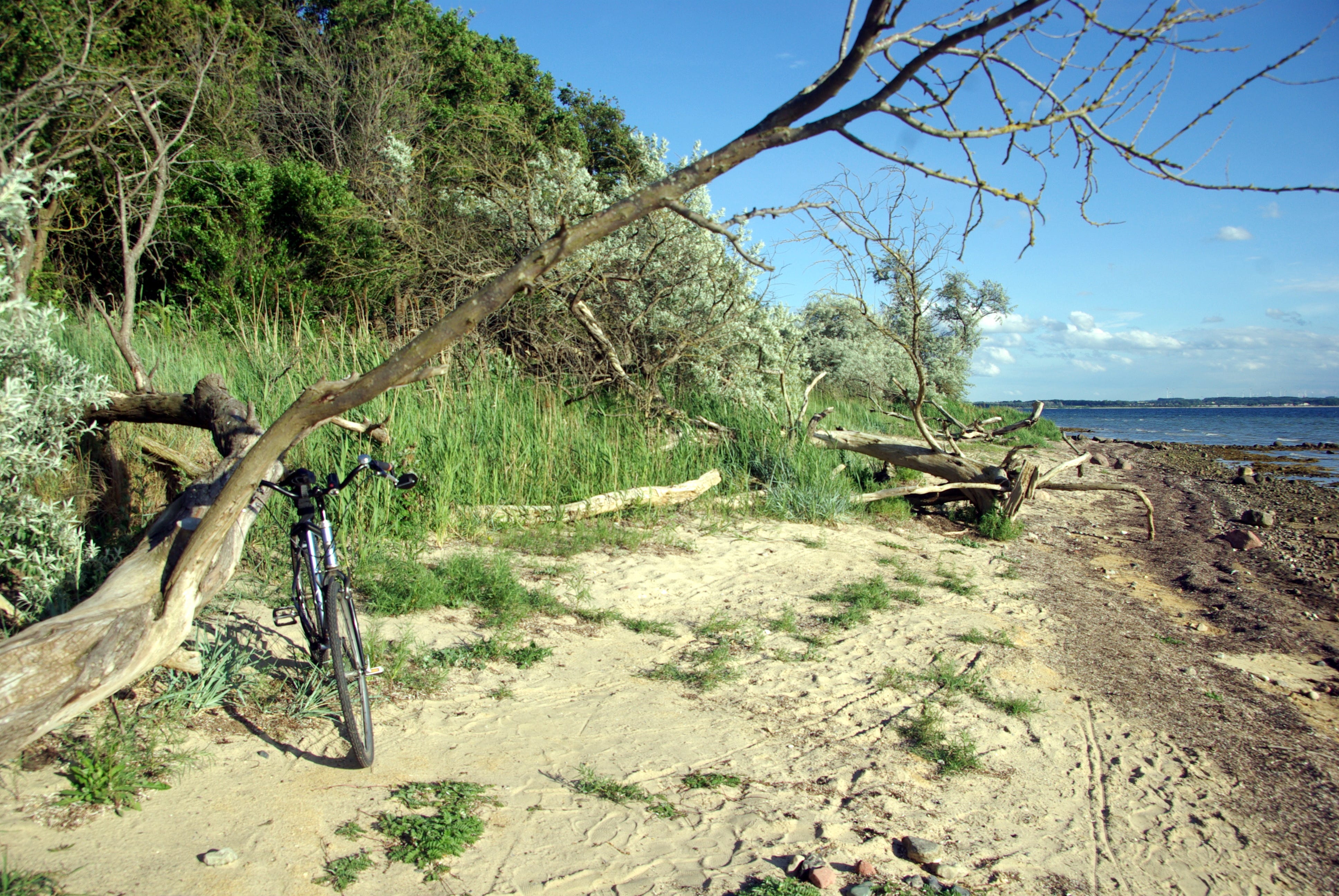
Das Kliff hatte nichts Tröstliches. Gerade deshalb tat es gut. Kein Kiosk, keine Musik, keine Strandkörbe. Nur Sand, Gras, Wind und der Abbruch der Erde.

Der Horizont. Die See. Die Küste. Von hier aus sieht alles dauerhaft aus. Nichts davon stimmt.

Später stand ich vorm alten Leuchtturm von Timmendorf. Überm Hafen türmten sich dunkle Wolken. Für einen Moment fiel Sonnenlicht auf den Turm, während ringsum der Himmel fast schwarz wurde. Es sah aus, als hätte jemand einen Scheinwerfer auf ihn gerichtet.
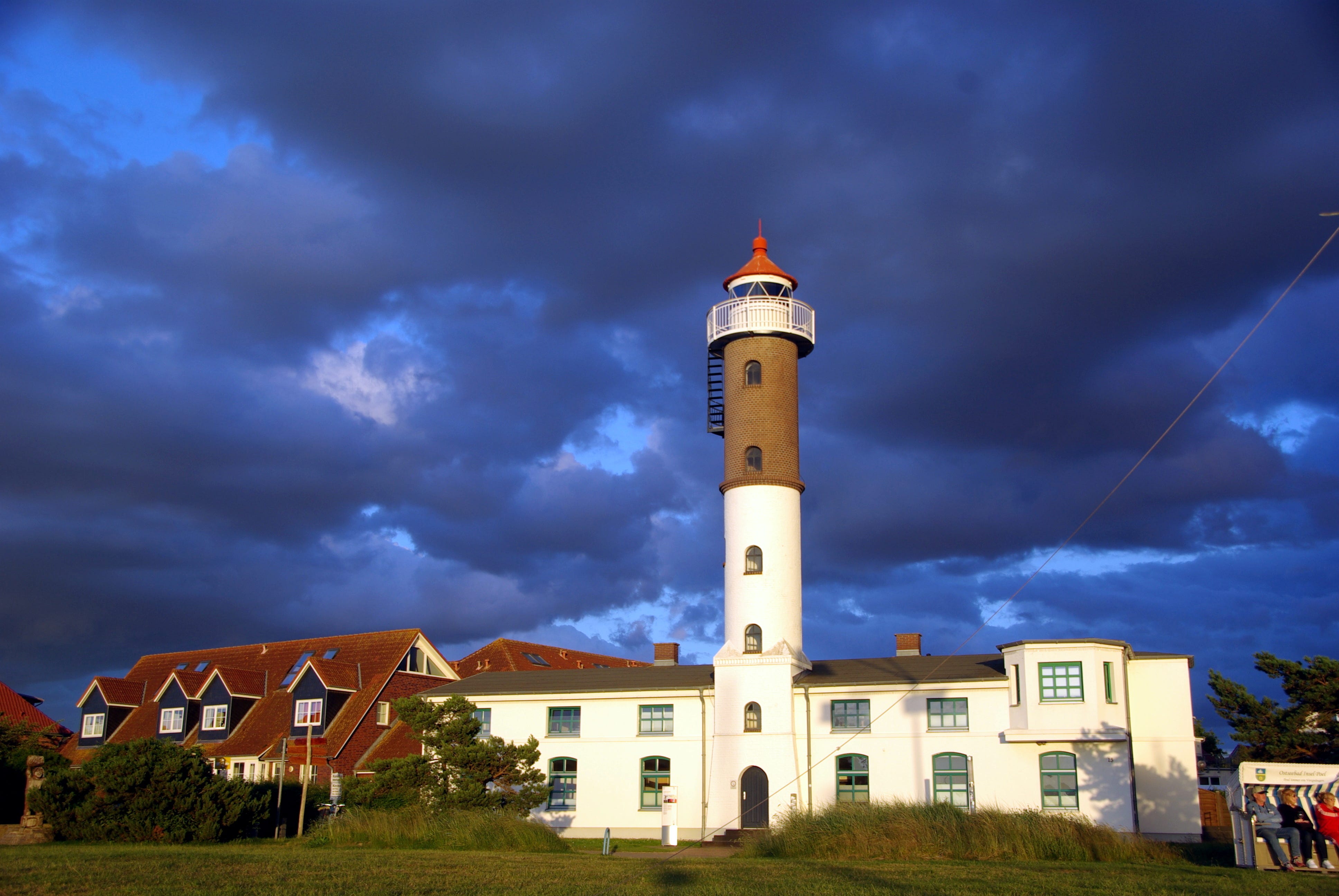
Früher war ein Leuchtturm ein Versprechen. Dort ist Land. Dort ist Gefahr. Dort ist Richtung. Heute stehen die Warnungen woanders.

Ein paar Minuten später war das Licht wieder verschwunden.

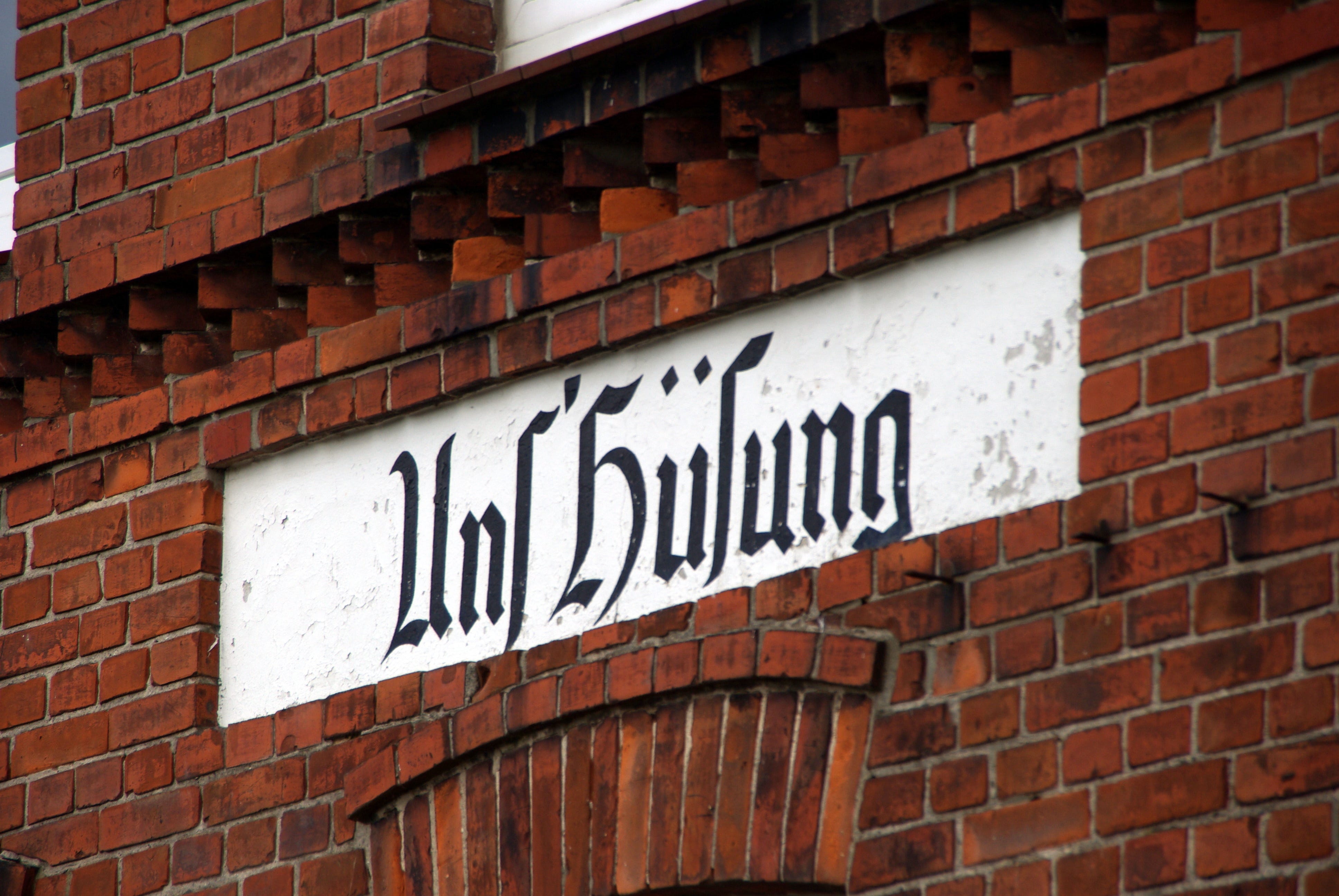
Auf einem Backsteingebäude stand in verblassten Buchstaben: „Uns’ Hüsung“. Ein Wort aus einer anderen Zeit. Es hing dort, als hätte es vergessen, dass die Welt weitergezogen war. Die Insel ist voll von solchen Resten. Nichts Spektakuläres. Nur Spuren.
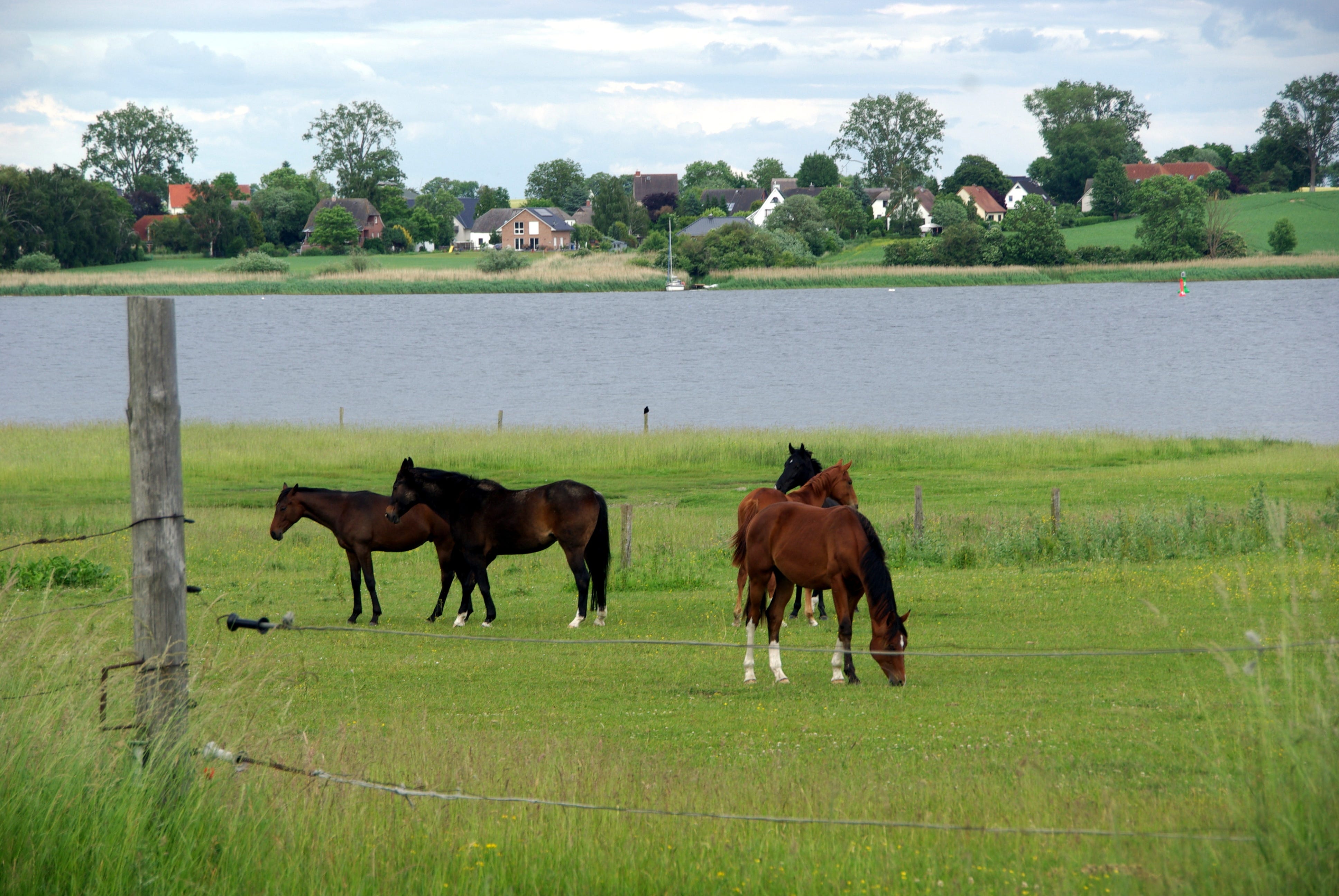
Auf einer Weide grasten Pferde. Hinter ihnen lag das Wasser.
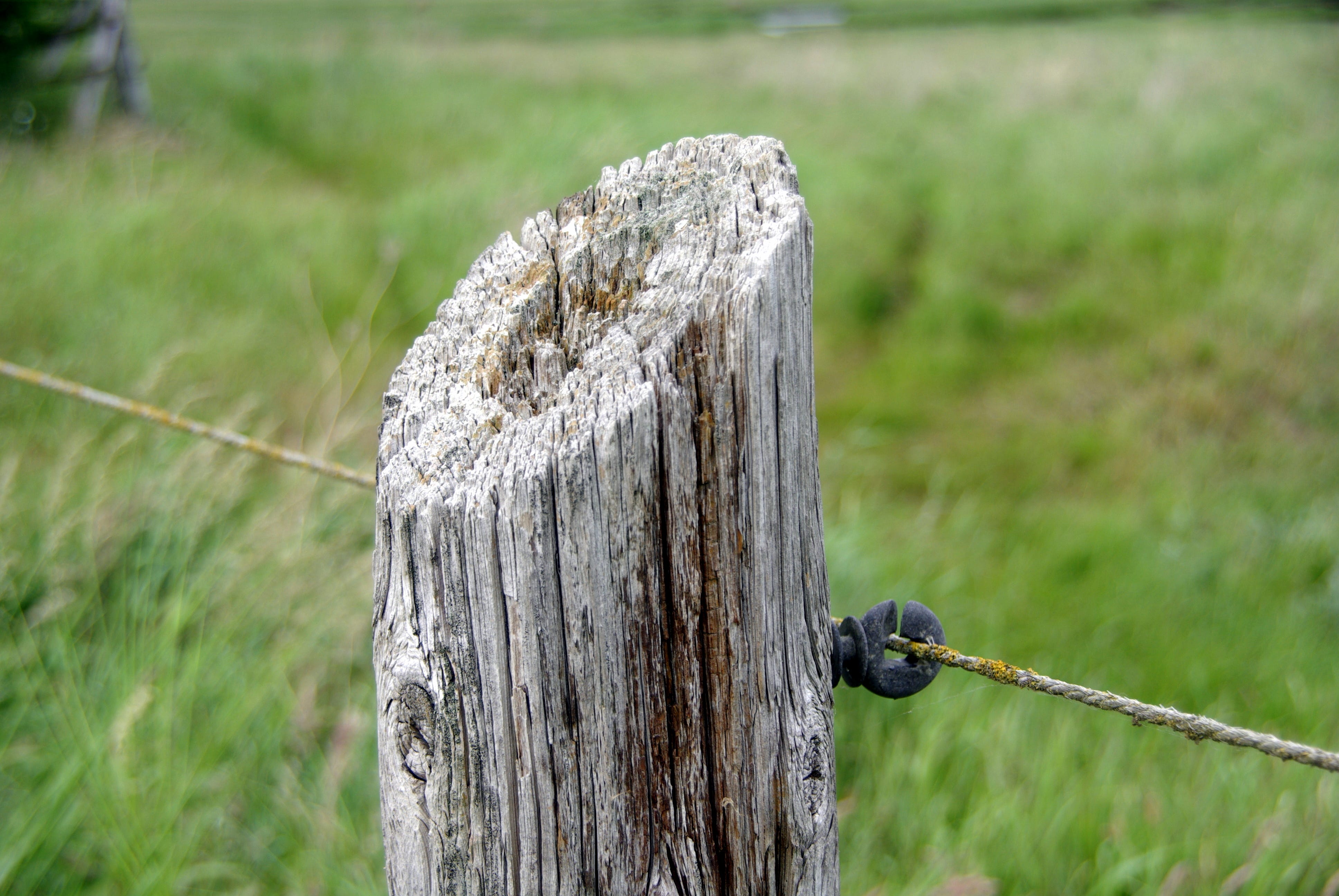
Ein Zaunpfahl, verwittert vom Salz und vom Wind, hält noch immer den Draht.
Landschaften tun so, als seien sie einfach da. In Wahrheit sind sie Arbeit, Ordnung, Pflege, Besitz und Wetter.

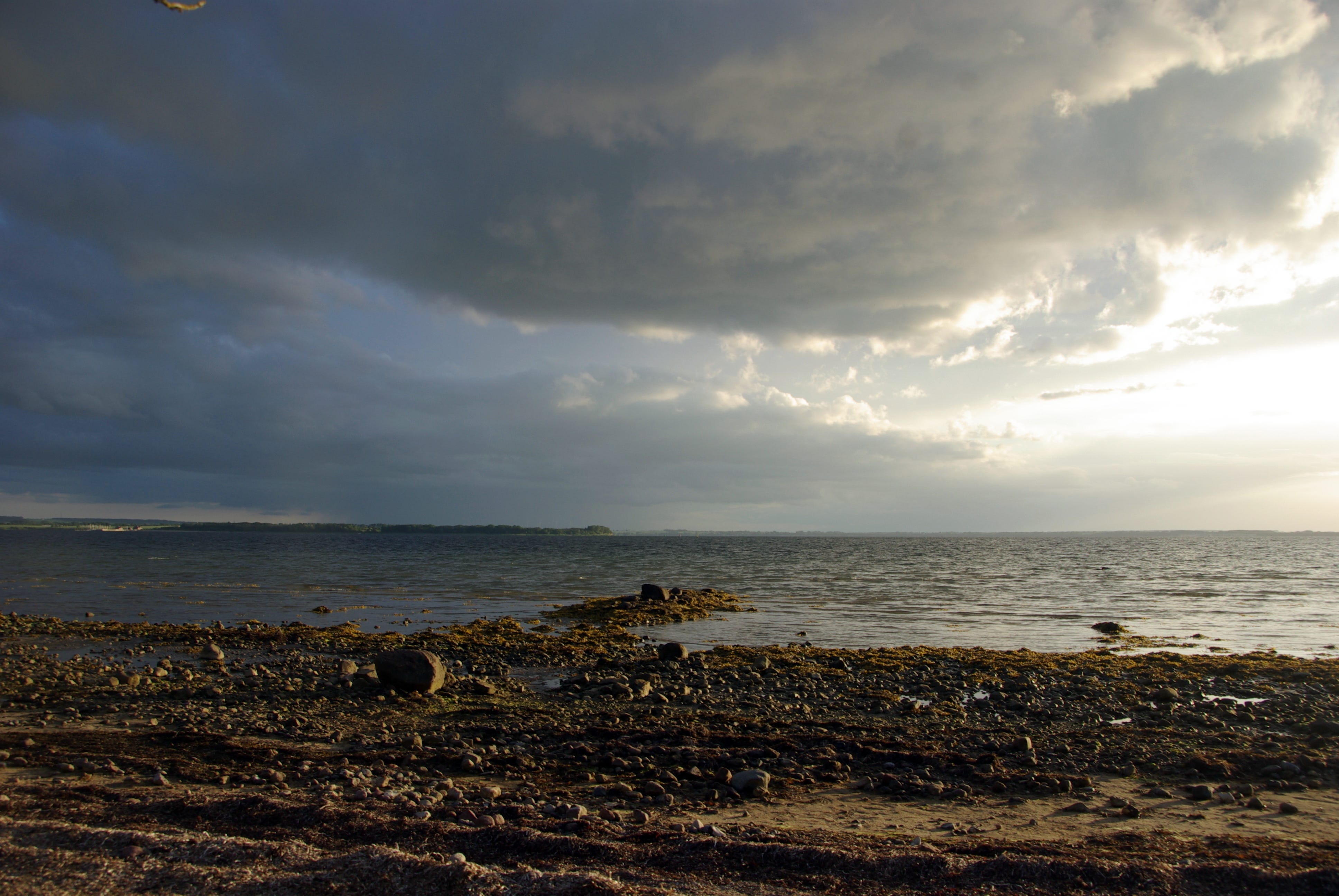
Später zog eine Front über die See. Das Licht kam jetzt schräg von Westen. Die Küste lag im Gegenlicht. Das Wasser wurde silbern. Die Wolken standen übereinander wie Gebirge.
Draußen fuhr ein einzelner Segler nach Norden.
Wo früher nur der Horizont war, war jetzt eine Lage. Routen, Grenzen, Flotten, Manöver, gesprengte Pipelines. Drohnen flogen übers Baltikum. Der Krieg berührte schon das Meer. Nichts davon war zu sehen, und doch war es nicht mehr wegzudenken.
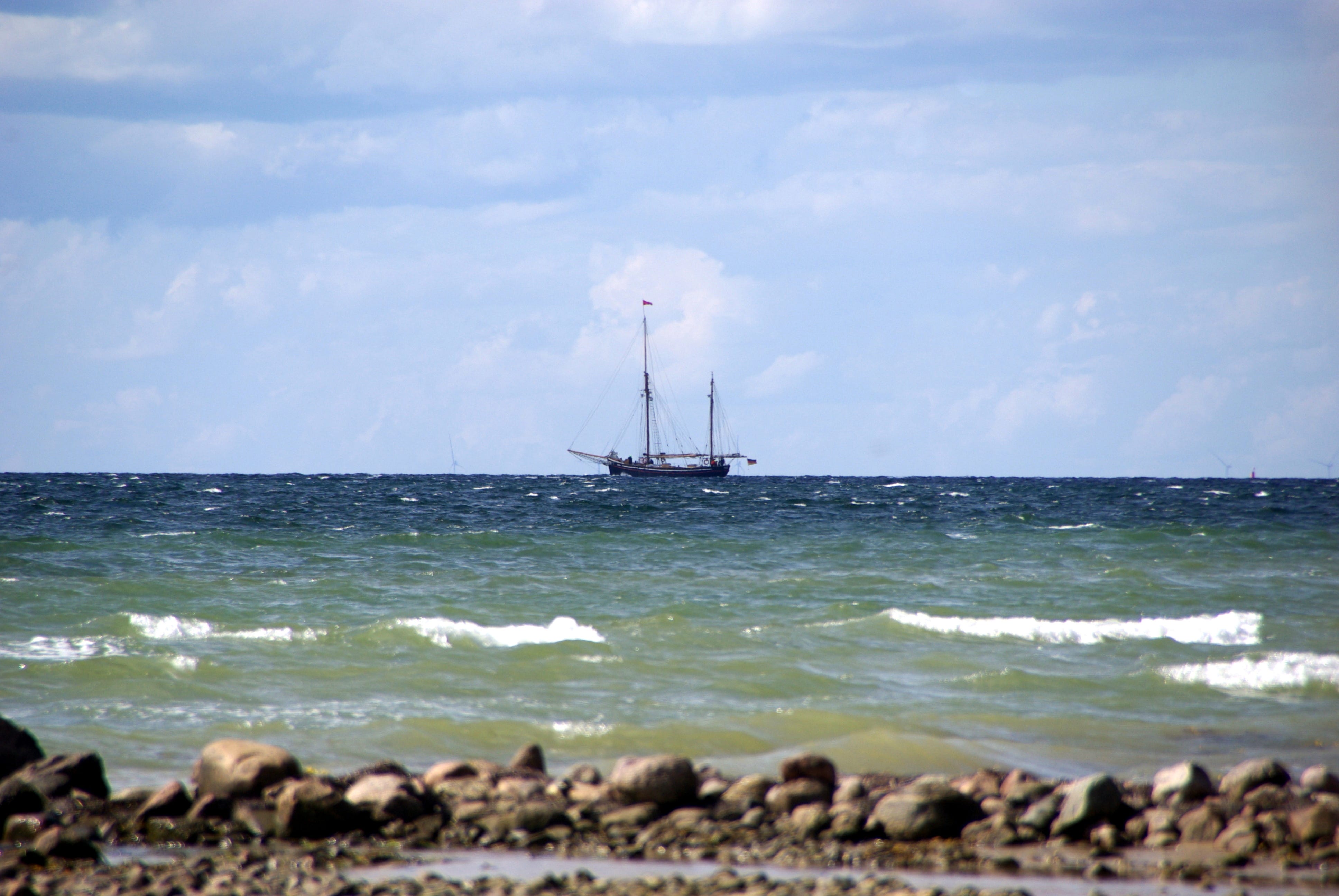
Für einen Moment wirkte das Schiff verloren in der Weite. Dann begriff ich, dass das nur die Perspektive vom Ufer war. Wahrscheinlich war es genau umgekehrt. Wir, die an Land festlagen, waren verloren, zwischen Nachrichten, Terminen und den immer schärfer werdenden Debatten über Krisen, Aufrüstung und die Zukunft Europas. In diesen Zeiten, wo wir allen Mut verloren hatten und unsere Anführer komplett den Verstand.

Hier draußen verlor das alles für ein paar Stunden seine Lautstärke. Nicht seine Bedeutung. Nur seine Lautstärke.
Der Wind blieb.

Die Wolken zogen weiter.

Die Insel lag im Gegenlicht.


6. Dezember 2025

Am Rand der sichtbaren Dinge

Vom S-Bahnhof Bellevue ist es kein weiter Weg zur Spree. Abends liegt der Fluss schwer zwischen den Ufermauern, wie ein technisches Becken.


Die S-Bahn rattert auf dem Stahlbogen über das Wasser, rot-gelbe Waggons ziehen im engen Rhythmus vorbei. Unten gehen zwei Gestalten über den schmalen Steg, geduckt unter der Konstruktion, als gehörten sie nicht zur gleichen Stadt wie die, die oben vorbeifährt. Die Lampen werfen ein gelbes Dreieck ins Schwarz, es schwimmt kurz, verliert die Kontur, verschwindet.

14. August 2025

Belgrad, 25 Jahre danach

Die Ruine des Generalstabsgebäudes in der Nemanjina-Straße steht noch. Beton zersplittert, Treppenschächte offen wie Wunden. Gerüchte, man wolle das Ensemble schleifen, flammen alle paar Jahre auf. Ein Investor hier, eine Renditefantasie da. Ende 2024 wurde es konkreter. Serbiens Präsident Aleksandar Vučić will den Weg freimachen für den Abriss. Donald Trumps Schwiegersohn Jared Kushner plant auf dem Areal einen Luxuskomplex: Apartments, Hotel, Büros.

Der Widerstand kam unerwartet. Mitarbeiter des Republikanischen Instituts für Denkmalschutz weigerten sich, den Generalstab aus dem Zentralregister für unbewegliche Kulturgüter zu streichen. Noch steht die Ruine. Als Mahnung, als Störfall im Geschäftsmodell.

Belgrade, 25 years later

The ruins of the General Staff building still stand on Nemanjina Street. Concrete is shattered, stairwells lie open like wounds. Every few years, rumors flare up about tearing the complex down. An investor here, a return-on-investment fantasy there. By the end of 2024, things got more concrete. Serbian President Aleksandar Vučić wants to clear the way for demolition. Donald Trump’s son-in-law Jared Kushner plans to build a luxury complex on the site: apartments, hotel, offices.

The resistance came unexpected. Staff at the Republican Institute for the Protection of Cultural Monuments refused to strike the building from the central register of immova le heritage. The ruins still stand. As a warning. A disruption in the business model.

8. Mai 2025

Transit

Airports are promise and loss at once. Places without shelter, built of glass, concrete, and air conditioning. You wait—always wait. For flights, for connections, for arrivals. For coffee that tastes like nothing.

Transit

Flughäfen sind Versprechen und Verlorensein zugleich. Orte ohne Bleibe, gebaut aus Glas, Beton und Klimaanlagen. Man wartet, immer wartet man – auf Flüge, Anschluss, Ankunft, auf einen Kaffee, der nach nichts schmeckt.

18. März 2025

Sahara in the Atlantic


The wind carries fine dust, not from here. The sun casts long shadows on the hills. Volcanic ash, lava gravel, sparse shrubs clinging where nothing else will grow. The Atlantic rolls onto the shore in long waves.

2. Januar 2025

Das Jahr begann grau

Der Himmel war schwer und wolkenverhangen, die Luft feucht und kalt. Es war einer dieser Tage, an denen die Welt wie in Watte gehüllt scheint, ohne dass sie wärmer wird. Es war der erste Tag des Jahres 2025.


29. Dezember 2024

Im Nebel

Nebel hing über dem Luch. Der Weg war feucht, die Luft kalt. Die Kälte kroch in die Stiefel. Alles war still. Kein Wind, keine Vögel, nur ein einzelner Graureiher flog mit ausladenden Flügelschlägen über die Weide.


Unter einer Eiche stand eine Bank. Ich spürte die Kälte des nassen Holzes und setzte mich nicht. Der Nebel drückte schwer, und ich ging weiter.

In the Fog

Fog hung over the lowland. The path was damp, the air cold. The chill crept into my boots. Everything was still. No wind, no birds—only a lone grey heron, its wide wings beating slowly over the meadow.


A bench stood beneath an oak tree. I felt the cold of the wet wood but didn’t sit. The fog pressed heavily, and I walked on.

25. Dezember 2024

Lost and bombed at Hodeidah. Eine Weihnachtsgeschichte für die Verlassenen

[Diese Geschichte beruht auf wahren Begebenheiten, ist aber weder ein Tatsachenbericht noch eine genaue Aufzeichnung. Sie ist ein Versuch, das Unerzählte in Worte zu fassen. Sie ist die erste in einer Reihe von Geschichten, die ich vorläufig "Schattengeschichten aus dem Vergessen" nennen will.]

Wir waren acht Männer auf einem Schiff, das niemand mehr wollte. Die Captain Tarek lag im Hafen von Hodeidah, unbeweglich wie ein rostiger Sarg. Der Krieg war überall. Man hörte ihn in der Ferne, manchmal sah man ihn. Explosionen, Rauch, Funken am Horizont. Wir hörten nicht mehr hin.


Der Kapitän war längst verschwunden. Kein Diesel, keine Vorräte. Wir teilten uns Reis, der nach Salz schmeckte, und Wasser, das nach Öl roch. Der Koch machte das Beste daraus, aber viel war das nicht. Niemand sprach vom nächsten Tag. Es gab keinen Plan, nur warten.

24. Dezember 2024

Lost and bombed at Hodeidah. A Christmas tale for the abandoned

[This story is based on true events, but it is not a factual account nor an exact record. It is an attempt to put into words the unreported. It's the first in a series of stories I will call Shadow Stories from the Forgotten, for now.]


We were eight men on a ship no one wanted.

The Captain Tarek sat in the port of Hodeidah, motionless like a rusty coffin. The war was everywhere. You could hear it in the distance, sometimes see it. Explosions, smoke, sparks on the horizon. We stopped listening.

someone at X


The captain had been gone for months. No diesel, no supplies. We shared rice that tasted of salt and water that smelled of oil. The cook did his best, but it wasn’t much. No one spoke of tomorrow. There was no plan, just waiting.

13. Oktober 2024

Die Rose


Wir kamen nach Heidenheim, müde und durstig. Es war der 19. Mai, und wir waren achtzehn Kilometer durch feuchtkaltes Wetter marschiert, ohne ein Gasthaus zu sehen. Die Dörfer waren still. Die Türen waren verschlossen, die Fenster mit Brettern vernagelt, die Schilder alt und verblasst. Es war, als hätte der Wind alles mit sich genommen, außer der Straße unter unseren Füßen.

The Rose


We came to Heidenheim, tired and thirsty. It was the 19th of May, and we had marched eighteen kilometers through damp, cold weather without passing a single inn. The villages were silent. Doors were locked, windows boarded up, signs faded and worn. It was as if the wind had carried everything away, except for the road under our feet.

8. Juni 2024

Photographer of “Earthrise” died in a plane crash. His picture changed our perception of planet Earth

The photographer of “Earthrise” is dead. Astronaut William Anders was killed in a plane crash. I had used his famous photo Earthrise as a reference in an essay some time ago. RIP


“Earthrise” is the name of the NASA photo AS8-14-2383HR taken on December 24, 1968 by astronaut William Anders during the Apollo flight. It is undoubtedly one of the photos that has profoundly changed and shaped our perception of our planet and our place in the universe. Anders’ photo taken with a Hasselblad-500 camera makes it immediately sensually clear that the Earth is a blue planet. The world’s oceans cover 71 per cent of the planet’s surface, and are essential to the global climate and ecological balance, to the habitability and existence of life on the planet. At the same time, the oceans are the largest and one of the most important fields in which “man’s metabolism with nature is mediated, regulated, and controlled by his own actions” (Marx and Engels 1968: 192).

Jörn Boewe, Major Trends in Work at Sea: Outline of a Political Economy of Maritime Labour, in: Handbook of Research on the Global Political Economy of Work, edited by Maurizio Atzeni, Dario Azzellini, Alessandra Mezzadri, Phoebe Moore, Ursula Apitzsch (Hrsg.) 708 pp., 2023, Edward Elgar Publishing Ltd., ISBN 978-1-83910-657-6

https://www.e-elgar.com/shop/gbp/handbook-of-research-on-the-global-political-economy-of-work-9781839106576.html

https://www.dropbox.com/scl/fi/p3cc66jvx2ft788isfeob/Major-trends-in-work-at-sea-Boewe-research-handbook-of-the-global-economy-of-work-2023.pdf?rlkey=vvv05b899weja4g6rwo5717s4&e=1&dl=0


11. August 2022

Let's roll again. ITF Baltic Week of Action goes on, after two years of forced interruption


I am glad to hear that after a two-year forced interruption due to the pandemic, the ITF Baltic Week of Action will be held again this year in September. Albeit small-scale and rather symbolic, it embodies the idea of immediate workers' solidarity across national, professional, organizational and bureaucratic boundaries. It can be read as a seedbed for a holistic cross-sectoral politics of solidarity from below, as we need it more than ever today, in times of increasingly self-and all-destructive late capitalism.
Is this idea an unrealistic pipedream? This is a typical objection from bureaucrats and narrow-minded people who don't realize how much the ground is burning beneath our feet. In a contribution to the hopefully soon to be published "Handbook of the Political Economy of Work", I try to develop such a strategic vision on a materialist basis.

The sea is a transport route for people and goods, a reservoir for food (fishing and aqua farming), a source of raw materials (offshore mining), energy (both fossil fuels such as oil and gas, and renewable ones such as wind and tidal power), a space of military conflict, human recreation (or the illusion that the modern tourism industry sells for that purpose) and, last but not least, a place of human contemplation and inspiration. The oceans are the fluid that enables and holds together the economic cultural and ecological existence of humanity as a global species.

I remember, when one of the traditional East German shipyards, Volkswerft Stralsund, slid into insolvency (not for the first time) in the fall of 2012, Hamani Amadou, Inspector of the International Transport Workers' Federation ITF, from neighboring Rostock paid a spontaneous visit to the shipyard workers, accompanied by a team of volunteers, dock workers from Lübeck and Rostock. Actually, they wanted to inspect incoming ships from flag of convenience states for compliance with minimum collective bargaining standards as part of the international "Baltic week of action".

Why were they here, at a shipyard, in the organizational area of the German metalworkers' union IG Metall?

"This is where the ships are built on which the seafarers we organize are sailing, the ships our members load and unload in the ports," Hamani said. "Seafarers, dockers, shipyard workers - we are one family. If you suffer, we suffer too."

What may sound like sentimental maritime poetry is actually nothing more than straight prose. Since the 1990s, the conditions under which workers in the maritime or ocean-related economy perform their work have been subject to similar or even identical trends. Accelerated capitalist globalization, the financialization of the economy, the triumph of neoliberalism have led to increased de-unionization, precarization and devaluation of labor and the pitting of workers against each other in highly fragmented global labor markets. New technological possibilities have not mitigated the socially destructive consequences of these developments, but rather exacerbated them. A cross-sectoral, integrated theoretical and political approach to maritime work is therefore more necessary than ever.
Of course I know, that the practice of trade unions is still far from that holistic, cross-sectoral approach. So this has to be changed. It has to be done. It's that simple.

(Thanks to all the friends and companions who inspired and encouraged me to maritime writing.)

12. April 2022

It is clear where this is bound to lead. It's a pity, as perhaps the West is indeed the best of worlds

"I have been living in the West for more than half of my life now, but the bigotry of this 'best of worlds' still amazes me, and continues to do so. The West is simply incapable of understanding anything. In the current Spiegel, a cover story - well done for the most part - about young Muslims from Germany who join ISIS. Reporters try to find answers to the question of why, and they do an excellent job, researching, going into courtrooms, talking to parents, friends, experts, visiting mosques, tea shops, clubs - whatever you do as a reporter.

And then they say that the young men come "from a world in which war and religion have been banished from political self-understanding. The 70-year peace that has reigned in Western Europe has made warlike violence taboo ..."

What baffles me about this is the matter-of-factness with which West (Is Der Spiegel "the West"? Yes, it is.) passes over its own warlike actions here (not least in the Muslim world), as if that had nothing to do with the topic. And let's stay with Germany: 15 years after the air strikes on Yugoslavia, five years after the negligent bombing at Kunduz, we see ourselves as a society that has "made warlike violence taboo"? This is interesting.

The FRG was incapable of understanding the GDR, West Germany is incapable of understanding East Germany, Obama, Merkel, Spiegel, ARD and ZDF are incapable of understanding Russia. They are incapable of understanding Putin, and they are even proud of it. The West is incapable of understanding anything. Everything foreign to it is just an opportunity for self-congratulation, and good opportunities must not be missed.

It is clear where this is bound to lead. It's a pity, as perhaps the West is indeed the best of worlds." Notebook, November 21, 2014

19. November 2020

Maritime writing

Ever since I did research for my reportage "Rearguard action in Gdansk" at Stocznia Gdanska in 1996, I have written again and again about the connection between men and  sea. Reasons are simple. The ocean breeze, the wide horizon, seagull cries, fish, salt water. All that does me good in every respect. I don't have any romantic idea about working in the maritime logistic complex. Navegare necesse est - seafaring is a must, but it is most beautiful if you can do it for pleasure. Unfortunately, it is one of the pleasures I cannot afford as often as I would like to. Far too seldom I manage to spend my vacations on the coast, at sea and on islands. So what can I do? I just have to find some suitable work ...


26. August 2019

Endlessly traveling to Honolulu

"Many a trip continues long after movement in time and space have ceased. I remember a man in Salinas who in his middle years traveled to Honolulu and back, and that journey continued for the rest of his life. We could watch him in his rocking chair on his front porch, his eyes squinted, half-closed, endlessly traveling to Honolulu."

John Steinbeck, Travels with Charley: In Search of America


9. April 2019

Fixing up things


I've done a lot of different things journalists do over the last 25 years, but my favorite discipline is still to drive around the country and write stories about unspectacular people - workers, refugees, hillbillies of all kinds. Unlike politicians, artists, scientists or people who want to sell something, they don't push themselves forward. On the contrary, they have a certain basic mistrust of "the press," which, in my opinion, has increased in recent years.

This is not surprising. Since we have the internet and above all the "social media", people pay much more attention to their privacy. Today, nobody can be photographed as easily as 15 years ago. Those who are not already people of public interest prefer not to read their name in the newspaper (i.e. on the internet).

The other point is that they perceive journalists - if at all - either only as scurrying piecework workers in a media industry that seems incomprehensible but suspect to them (with which they are intuitively perfectly correct) or as part of the elites - no less suspect to them. They rarely, if ever, come into contact with the latter type in their world, but if they do, it seems self-evident to them that there is an unbridgeable gap between them and those "alpha journalists" that has rapidly widened in recent years.

The crazy thing is that most of the people I've written about in the last 25 years, when they've read my lines afterwards, have reacted with an overwhelming and touching thankfulness to me (at least if I haven't allowed myself any major mistakes in my job and haven't written any nonsense about them).

ITF Baltic week of action, Sept. 2018, Wismar